Friday, March 31, 2006

Prayer is still a dud

Oh but wait! Prayer might just be evolving into a nocebo.

In the largest study of its kind, researchers found that having people pray for heart bypass surgery patients had no effect on their recovery. In fact, patients who knew they were being prayed for had a slightly higher rate of complications.

...

The work, which followed about 1,800 patients at six medical centers, was financed by the Templeton Foundation, which supports research into science and religion. It will appear in the American Heart Journal.

Dr. Herbert Benson of Harvard Medical School and other scientists tested the effect of having three Christian groups pray for particular patients, starting the night before surgery and continuing for two weeks. The volunteers prayed for "a successful surgery with a quick, healthy recovery and no complications'' for specific patients, for whom they were given the first name and first initial of the last name.

The patients, meanwhile, were split into three groups of about 600 apiece: those who knew they were being prayed for, those who were prayed for but only knew it was a possibility, and those who weren't prayed for but were told it was a possibility.

...

The study looked for any complications within 30 days of the surgery. Results showed no effect of prayer on complication-free recovery. But 59 percent of the patients who knew they were being prayed for developed a complication, versus 52 percent of those who were told it was just a possibility.

In fairness, the difference between the two groups may not be statistically significant. If I read it right sample size of those who've been told they were prayed for is 600, while the sample size of those who were told being prayed over was only a possibility is 1,200. For a 95% confidence level the margin of error for the former group (n = 600) is 3.9% and for the latter group (n = 1,200) is 2.8% So the confidence intervals are 59% ± 3.9% and 52% ± 2.8%, respectively (see footnote for equations). Since the two intervals don't overlap the difference is statistically significant at the 95% level. But at the 99% confidence level the intervals are: 59% ± 5.2% and 52% ± 3.7%. Because of the overlap the difference isn't statistically significant. (I'm not really sure of the sample size for the second group. If n = 600 and not 1,200 all the more reason not to make a mountain out of this difference)

Dr. Harold G. Koenig, director of the Center for Spirituality, Theology and Health at the Duke University Medical Center, who didn't take part in the study, said the results didn't surprise him.

"There are no scientific grounds to expect a result and there are no real theological grounds to expect a result either,'' he said. "There is no god in either the Christian, Jewish or Moslem scriptures that can be constrained to the point that they can be predicted.''

If even on theological grounds we can't expect any results then why pray?!

Within the Christian tradition, God would be expected to be concerned with a person's eternal salvation, he said, and "why would God change his plans for a particular person just because they're in a research study?''

Ah yes. God's concern is to ferry souls as quickly as possible to the pearly gates. It was a mistake on His part to design Intellligent doctors who're getting better and better in messing his salvific timetable.


---

margin of error = z[f(1-f)/n)]0.5

where
z = number of standard deviations to achieve the desired confidence level. For a 95% confidence level z = 1.96; for 99%, z = 2.58.
f = sample frequency
n = sample size

South (Asia) Park

Apparently divorce among Muslims in Bengal is a cinch, at least for the husband. Just uttering "talaq" three times automatically gets rid of the wife. But what if you inadvertently say the magic word whilst in the REM state? Lack of consciousness it seems is irrelevant. In the nutty world of West Bengal chanting the T-word in your sleep is just as effective. Freud would love these blokes--they understand the concept of repressed desires, you see.
Akhtar says he came home on the night in question last December and took sleeping tablets following a row with his wife.

"I uttered the 'talaq' while I was asleep. I didn't mean it," Akhtar, a worker at a local brick field, told the BBC.

"It's unfair that I'll have to leave my wife for what I said in my sleep and we are being socially boycotted by the villagers because we haven't accepted the verdict of the clerics."

Sobena says: "Enough is enough. We have become a laughing stock. Come what may, I can't stay without my husband."

Not good to be high on this dope

It's all in the mind and too much dopamine may be to blame for messed up perceptions.
Some research indicates that an excess of dopamine in the brain can cause people to spot patterns where others see only random data. Dopamine is the chemical in our brains most commonly associated with pleasure. Too little of it can lead to attention deficit disorder and Parkinson's disease. Too much, though, leads to schizophrenia and other mental disorders.

Researchers at University Hospital at Zurich found that subjects given a dose of dopamine were more prone to seeing faces and words when scrambled patterns appeared on a screen in front of them. Peter Brugger, the neurologist who led the study, says the results show that dopamine not only plays a role in detecting patterns in visual displays but probably in perceiving patterns -- real or not -- in events. A tendency to spot patterns and connect the dots is the foundation of conspiracy theorizing.

"If there is too much [dopamine], you begin to develop hallucinations and delusions, including delusional ideas of reference," Brugger says.

I'm of course wondering whether those who see simulacra left and right are just suffering from having a brain that's producing too much of this substance. May be advantageous as an adjunct to creativity but it sure isn't prescribed for those already afflicted with the god delusion.

False beliefs causes discomfort in me

Atheist Revolution is on the mark:
I believe that the value of any belief must be determined at least in part by the veracity of the belief. A false belief, no matter how comforting, can never be as valuable as a true belief.

I couldn't agree more. Concern about whether what we believe in is true or not ought to always precede whatever comfort we may derive from it. Believing something simply because it's comforting is among the wrong reasons to believe.

Categories:

Holy baloney

Why do we insist that some good evidence be at hand before we even entertain incredible/extraordinary claims such as "An invisible entity spoke to me and gave me a message to share with the world"? Among the reasons is that we don't want to subscribe to false beliefs, we don't want to inadvertently buy into and get sucked into someone's delusions.

The problem with some delusions is that they are so rife, ubiquitous, politically correct, taken so matter-of-factly by civilization, and even legitimized and legalized (to the extent that some societies penalize those who don't subscribe to them), that it is only with difficulty and effort that we can prevent ourselves from being overwhelmed by them and indoctrinated and brainwashed. Of course I am talking about none other than the delusion known as supernaturalism.

Doctoral candidate in neuroscience Sam Harris has some thoughts about this phenomenon, about delusions that survive to our day even as we're well into the 21st century.

Faith and Madness
by Sam Harris

Is a person really free to believe a proposition for which he has no evidence? No. Evidence (whether sensory or logical) is the only thing that suggests that a given belief is really about the world in the first place. We have names for people who have many beliefs for which there is no rational justification. When their beliefs are extremely common we call them "religious"; otherwise, they are likely to be called "mad," "psychotic," or "delusional." Most people of faith are perfectly sane, of course, even those who commit atrocities on account of their beliefs. But what is the difference between a man who believes that God will reward him with seventy-two virgins if he kills a score of Jewish teenagers, and one who believes that creatures from Alpha Centauri are beaming him messages of world peace through his hair dryer? There is a difference, to be sure, but it is not one that places religious faith in a flattering light.

It takes a certain kind of person to believe what no one else believes. To be ruled by ideas for which you have no evidence (and which therefore cannot be justified in conversation with other human beings) is generally a sign that something is seriously wrong with your mind. Clearly, there is sanity in numbers. And yet, it is merely an accident of history that it is considered normal in our society to believe that the Creator of the universe can hear your thoughts, while it is demonstrative of mental illness to believe that he is communicating with you by having the rain tap in Morse code on your bedroom window. And so, while religious people are not generally mad, their core beliefs absolutely are. This is not surprising, since most religions have merely canonized a few products of ancient ignorance and derangement and passed them down to us as though they were primordial truths. This leaves billions of us believing what no sane person could believe on his own. In fact, it is difficult to imagine a set of beliefs more suggestive of mental illness than those that lie at the heart of many of our religious traditions. Consider one of the cornerstones of the Catholic faith:
I likewise profess that in the Mass a true, proper, and propitiatory sacrifice is offered to God on behalf of the living and the dead, and that the Body and the Blood, together with the soul and the divinity, of our Lord Jesus Christ is truly, really, and substantially present in the most holy sacrament of the Eucharist, and there is a change of the whole substance of the bread into the Body, and of the whole substance of the wine into Blood; and this change the Catholic mass calls transubstantiation. I also profess that the whole and entire Christ and a true sacrament is received under each separate species.
Jesus Christ--who, as it turns out, was born of a virgin, cheated death, and rose bodily into the heavens--can now be eaten in the form of a cracker. A few Latin words spoken over your favorite Burgundy, and you can drink his blood as well. Is there any doubt that a lone subscriber to these beliefs would be considered mad? Rather, is there doubt that he would be mad? The danger of religious faith is that it allows otherwise normal human beings to reap the fruits of madness and consider them holy. Because each new generation of children is taught that religious propositions need not be justified in the way that all other must, civilization is still besieged by the armies of the preposterous. We are, even now, killing ourselves over ancient literature. Who would have thought that something so tragically absurd would be possible?

(Sam Harris, The End of Faith, New York: W.W. Norton, 2005, p. 71-73)

Thursday, March 30, 2006

Ark sighted in the Netherlands

Banks actually loaned this guy a million dollars to build the Ark. His profit projections must've been quite persuasive.
Dutchman Johan Huibers is building a working replica of Noah's Ark as a testament to his Christian faith. The 47-year-old from Schagen, 45km (30 miles) north of Amsterdam, plans to set sail in September through the interior waters of the Netherlands.... Johan's Ark is a fifth of the size of Noah's and will carry farmyard animals.... Although Mr Huibers has tried to remain true to the ark described in the Bible, Johan's Ark is constructed with American cedar and Norwegian pine, rather than "gopher wood".... [Huibers] said he plans to stock his ark with horses, lambs, chickens and rabbits - mostly baby animals to save space.

Huiber's Ark will be 20% the size, will not be made of the same material, will carry only a few species of domesticated animals, and won't be stocked with provisions and out at rough seas for more than a year. So how is it in fact anywhere close to being like Noah's Ark?!

Hey Johan, how about setting sail for Florida and parking your boat in Disneyland? Just a friendly pilot's tip: Make sure the sweet smell of freshly sacrificed lambs reaches your Supremo as you're crossing the Bermuda Triangle. Wouldn't want you to end up a Flying Dutchman, would we?

Flew away to roost

Famed atheist turned wuss Antony Flew has retreated into his shell. To top it off no one seems to know why he believes in whatever it is he now believes in.

During the course of 2005, Flew cut off all correspondence and now refuses to speak to any member of the press. When Matt Donnelly, a reporter for Science and Theology News, asked him for permission to read and quote his letters to me, Flew refused, and insisted that even his phone conversations with Donnelly not be used. A friend and eyewitness whom I trust reported to me that he and another prominent secular humanist spoke to Flew in private during his recent visit to New York for the 25th Anniversary conference of the Council for Secular Humanism in October of 2005. They found him to be philosophically incoherent. He affirmed his belief in an uncaring, uninvolved, unconscious (yes, unconscious) Jeffersonian Deity, but despite half an hour of questioning as to why, he could not give any specific reason for this belief.

At 83 Antony Flew may be showing signs of senility. If he can't be coherent philosophically--and he is a philosopher--and can't give good reasons or any reason at all for his change of mind, why should we even take his "conversion" seriously?

What a way to go.... Should we cross our fingers for a deathbed reconversion?

Wednesday, March 29, 2006

And there was darkness

Some Indians are not taking any chances with today's solar eclipse:
One Indian paper advised pregnant women not to go outside during the eclipse to avoid having a blind baby or one with a cleft lip. Food cooked before the eclipse should be thrown out afterward because it will be impure and those who are holding a knife or ax during the eclipse will cut themselves, the Hindustan Times added.

As for "those who are holding a knife or ax during the eclipse will cut themselves" it really is good advice to lay down your arms: It was almost 12 noon and as Mrs. Kali was hurriedly julienning the peppers the sun was suddenly blotted out of the sky (by her husband Lord Shiva). "OOOUUUCH!!! Shoot! Now my green bell peppers have all turned red."


(via God is for Suckers)

Tuesday, March 28, 2006

He's come out of the woodwork again

Even before reading Myers' commentary I immediately knew that this time around Jesus was paying tribute to that evil bastard atheist Picasso.

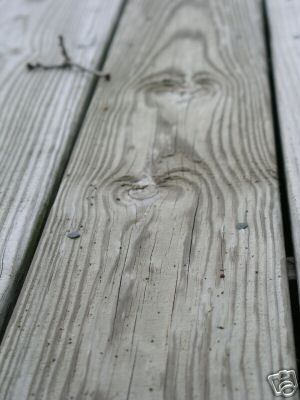
Here's the seller's blurb for his $999 plank:
As I sat in my kitchen one morning, I noticed that a plank on our deck, framed by an outdoor chair, appeared to be a CLEAR image of Jesus....

I never considered that something like this could happen to our family. I thought that other objects like this were fodder for jokes and disbelief -- but this is real.

Jesus' face can be seen so clearly.

I think there is a greater purpose for the image. It needs to be shared with many. It could be used by some individual for their own purposes, but I think there is a greater destiny of which I am not aware.

Ok, I give in. The believers win! I too want the Lord and Savior in my life. No need to prod me. I'm off to our local Church of Home Depot to find Him at the lumber section. At 10,000% profit I'm sold!

Monday, March 27, 2006

Thou shalt mutilate Ken and Barbie

In a bid to (s)nip idolatry in the bud a former grand rabbi of Israel is imploring parents to amputate their children's dolls.
Basing the move on a Biblical ban on the possession of idols, Mordechai Eliyahu, a Sephardic rabbi, broadcast his edict on a religious radio station calling for an arm or a leg to be dismembered.

In the case of a teddy bear or other stuffed animals, the children will see their beloved toys lose an ear or an eye instead.

"It is very important that these toys do not remain intact so as to remove the element of idolatry," said Eliyahu.

Religion just gets nuttier and nuttier.

The crazy realm of religion

Abdul Rahman the Afghan who converted to Christianity many years ago and who was perilously at the verge of being executed for becoming a Muslim apostate is now being freed. Relatives of his had told the court that the case against Rahman should be dismissed on the grounds that he's insane. But as Massimo Pigluicci rightly points out, "The sadly ironic thing, of course, is that the very notion of punishing (by death or otherwise) someone for his beliefs is the real insanity."

Down the rabbit hole we go when we examine religion where things just get curioser and curioser, crazier and crazier.

Oops! Wasn't ET after all

Zeus had dunnit! Some Russian researchers are attributing the circular patterns to lightning:
“Two young workers and I were testing high-voltage hardware. The cable that we used to supply the current was hanging 10 meters above the ground when suddenly it discharged an artificial lightning strike on to the lawn below. And the grass bent in even clockwise circles,” the researcher said. He added that they conducted several experiments and got crop circles of about 5 meters in diameter.

Another argument backing up this theory is the fact that real crop circles are often accompanied by so called lichtenberg figures — narrow strips of bent grass, usually left by a lightning strike.

Now that I'd like metereologists, other scientists, and CSICOP to check out! I wonder if circlemakers has a Russian chapter.


---

Homer tells us that among his other royal duties Zeus is the lord of lightning. (Jenny March, Cassell's Dictionary of Classical Mythology, UK: Cassell & Co., 1998, p. 790)

ET mows the lawn in Russia

A school has recently been opened in Russia by ufologists to teach the townsfolk all about Alien Diplomacy and Communications, among other things. The interest in ET cropped up when they saw the signs, the writing on the ground.
The commotion over UFO sightings in Central Russia’s Togliatti began this summer when crop circles appeared in a field just outside the city. The enormous pictogram in the grass attracted dozens of journalists and hundreds of curious onlookers.

Good to see scientists actually caring

One hopes there will be a lot more who will come out to challenge all the antiscience and poppcock going around: Science accuses BBC of medical quackery.
SOME of Britain’s leading scientists have accused the BBC of “quackery” by misleading viewers in an attempt to exaggerate the power of alternative medicine.

Sunday, March 26, 2006

Still trying to save their delusions

From this week's What's New by physicist Bob Park:
Today, in a major front-page story, staff writer Rob Stein tells us that "the largest, best-designed study of intercessory prayer" is being published in two weeks. What does it say? The secret is guarded as tightly as the Academy Awards. However, as I write this, the world population clock reads 6,505,424,096. Most of them pray. A bunch of them pray 5 times a day. They pray mostly for their health, or that of loved ones, making prayer by far the most widely practiced medical therapy. It's a wonder anyone is still sick. No one doubts that personal "petitionary" prayer benefits believers. Optimism is good medicine. To the believer, prayer is a stronger placebo than sugar pills. Stein, however, has his facts wrong. The controversy (if there ever was one among scientists) was settled in 1872 by Sir Francis Galton when he published "Statistical Inquiries into the Efficacy of Prayer." Galton, a cousin of Charles Darwin, recognized that remote prayer by strangers would be blind to the placebo effect. Since the Order for Morning Prayer of the Church of England includes prayers for the health and long life of the monarch and the archbishop, he compared their longevity to that of the general population and found no difference. So who is doing this new study? Herbert Benson, founder and president of the Mind-Body Institute, who touted the health benefits of prayer in his 1975 bestseller "The Relaxation Effect." It would be a miracle if he now discovers there's nothing to it. It's in our hands now, we have two weeks to pray that the study turns out to be objective.

Saturday, March 25, 2006

Back in college I wasn't this keen about coins

It's math class again. Suppose I toss a coin twice without allowing you to see the results. After the two flips I tell you that at least one landed tails (I swear to Kali I'm not lying). What's the probability the other toss landed tails as well? How should you bet?

I imagine that for not a few (as it would've been in my case) alarms have gone off in their heads with the PA system blaring, Achtung! Gambler's Fallacy! Gambler's Fallacy! The probability is still 1/2 since each coin flip is independent of other flips, right?

Well, sorry to say but you sounded a false alarm. The probability figure is incorrect even as indeed coin tosses are independent events. So what's going on here?

Note that what we're given is the result for one toss. We're not told whether this is for the first or second toss. That makes a lot of difference.

There are exactly four possible outcomes for two coin tosses: TT, HT, TH, HH (the first letter of each pair denotes the result of the first coin toss). Given the problem above, since at least one of the tosses landed tails, HH (getting heads on both flips) is not relevant to our case. Thus, the only possibilities left are TT, HT, and TH.

As you can see, out of the three possible outcomes there is only one where the other toss would've been tails. Therefore, it is more likely that the other toss resulted in heads. The probability it landed tails is only 1/3. So betting heads is the sensible thing to do.

If, on the other hand, we had been told that the first toss had landed tails, then the only possibilities are TH and TT. The probability of getting tails on the second toss given that the first toss landed tails is, therefore, 50%. Likewise, had we been informed that the second toss had landed tails, then the only possible outcomes are HT and TT. The probability of the first toss landing tails is, again, 50%.

The lesson here is that it is very important to be clear about what the given scenario is and what the question is actually asking. Subtle changes can make all the difference in what the solution and answer will be.


---

References:

Hugh G. Gauch, Jr. 2003. Scientific Method in Practice. Cambridge, UK: Cambridge University Press. p. 212-213.

Ian Stewart. The Interrogator's Fallacy.

What is science?

Jason Rosenhouse of Evolutionblog expounds:

Science is best viewed as an activity undertaken with a specific goal in mind. That goal is to understand the way nature works. We measure our understanding by the extent to which we can make nature's phenomena predictable and controllable. Any investigative technique that brings us closer to this goal can reasonably be considered part of science.

All of the standard pieces of the scientific method we learned about in high school - experimentation, hypothesis testing, inductive reasoning and so forth - have their role to play in bringing us closer to our goal of predictability and control. By contrast, hypothesizing the actions of ill-defined supernatural entities such as ghosts or poltergeists do not help us move closer to our goal. Consequently, the actions of supernatural entities play no role in modern scientific discourse. The day someone finds a way to use such an hypothesis to bring clarity to some confusing aspect of nature is the day scientists will embrace the supernatural.

Many of the terms that get thrown around in this discussion - such as testability, falsifiability, or methodological naturalism (MN)- are really just ways of saying that scientists care about predictability and control. Saying that scientists adhere to MN in their work is really just a shorthand way of saying that science is a very pragmatic enterprise, and that the naturalistic hypotheses are the ones that have historically proven useful to scientists. It is a phrase that accurately describes the way scientists approach their work, and it survives because the only alternative - methodological supernaturalism - has proven itself time and again to be utterly ineffective in bringing scientists closer to their goal.

Knowing vs.merely musing

What has theology ever said that is of the smallest use to anybody? When has theology ever said anything that is demonstrably true and is not obvious? ... If all the achievements of theologians were wiped out tomorrow, would anyone notice the smallest difference? ... The achievements of theologians don't do anything, don't affect anything, don't mean anything. What makes anyone think that "theology" is a subject at all?

--Richard Dawkins

Vis-a-vis factual claims and explanations the crucial question to ask is, How do you know that it's true?

The world's religions claim a lot of things, a good number of them contradicting one another. For example, Buddhism tells us that reincarnation is a fact. Other religions say otherwise and have their own afterlife scenarios. Who among them, if any, is correct? How do believers know that their claim is factually true?

While scientists regularly propose various explanations for a certain phenomenon not yet understood, explanations that not infrequently are contradictory and therefore cannot all be true, the very nature of science is that it is interested in finding out which one among them (if any) is the correct one. Or more precisely scientists are interested in which explanation best explains the data, which one is better in explaining a host of other phenomena (has a greater scope), and which one is better in predicting new phenomena.

Because of its insistence on investigating claims and testing explanations science progresses. It is a reliable way of actually knowing the world. Supernaturalism in contrast has nothing remotely resembling the rigorous epistemology and methodology of science. None whatsoever. It has no means of testing its claims and its claims are not testable. It cannot reliably know that its claims and explanations are true. This is the reason why supernatural beliefs multiply in number. Thus we see divergence in supernaturalism, while there is all the time a convergence in science. The number of competing/contradictory supernatural beliefs increase over time because 1. supernatural explanations/claims/beliefs can be as fantastical, insane, and ludicrous as one wants them to be, and 2. there is no way of finding out which one, if any, is actually true. Supernatural beliefs die only when no adherents are left to believe in them or when they fall out of fashion. The number of candidate scientific explanations, on the other hand, decrease over time, because science is merciless in ruling out patently incorrect ones using methods that have proven their mettle.

Science is predicated on critical thinking and testing its explanations. It is a self-correcting enterprise whose objective is to understand the world as best as possible, to know reality as intimately as possible. Supernaturalism meanwhile must condemn critical thinking, unless it wishes to end its existence, vacuous as it is.

Thursday, March 23, 2006

Ah! Finally something nuttier than just pareidolia

It's a simulacrum that's said to cause miraculous healings.

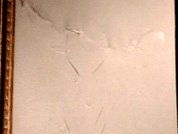
[The Triumph Learning and Worship Center for Life in Alabama] was flooded by Hurricane Katrina; causing some drywall in the building to buckle into an image that church members believe is an image of Jesus on the cross.

The church hung a picture frame up around the mark. People line up every day to touch it, and several people claim they've been healed.

"Many have been healed," said Pastor Ella Roberts. "One young man that belonged here was scheduled to go on dialysis. "The next week, he laid his hand there on the wall on the image, went to the doctor and they said they can't see where, why, how."

Church members say miracles occur when you touch the wall. "From touching that, my eyesight began to clear up completely," said Benita Bogan.

Got bad news for these deluded ones. That's no male on their wall. That's obviously a woman. How could they have missed those breasts! Some virgin they're acquainted with perhaps?

(via Pharyngula)

How not to use a hammer in Bangkok

Smashing idols may be hazardous to your karma:

Worshippers at a famous shrine in an upmarket shopping district of Bangkok beat a 27-year-old man to death yesterday after he destroyed a statue of a Hindu deity with a hammer.

Thanakorn Pakdeepol, who police said had a history of mental illness, was killed by worshippers after he broke into the Erawan shrine and used a hammer to shatter a four-headed statue of Brahma.

The shrine, covered in gilt, is popular with tourists and with Thais, with thousands visiting every day to seek favours and good fortune.

I'm wondering whether Pakdeepol was snuffed out in pretty much the same way he killed the statue because of the desecration or because he dealt a mighty blow to the community's tourism industry.